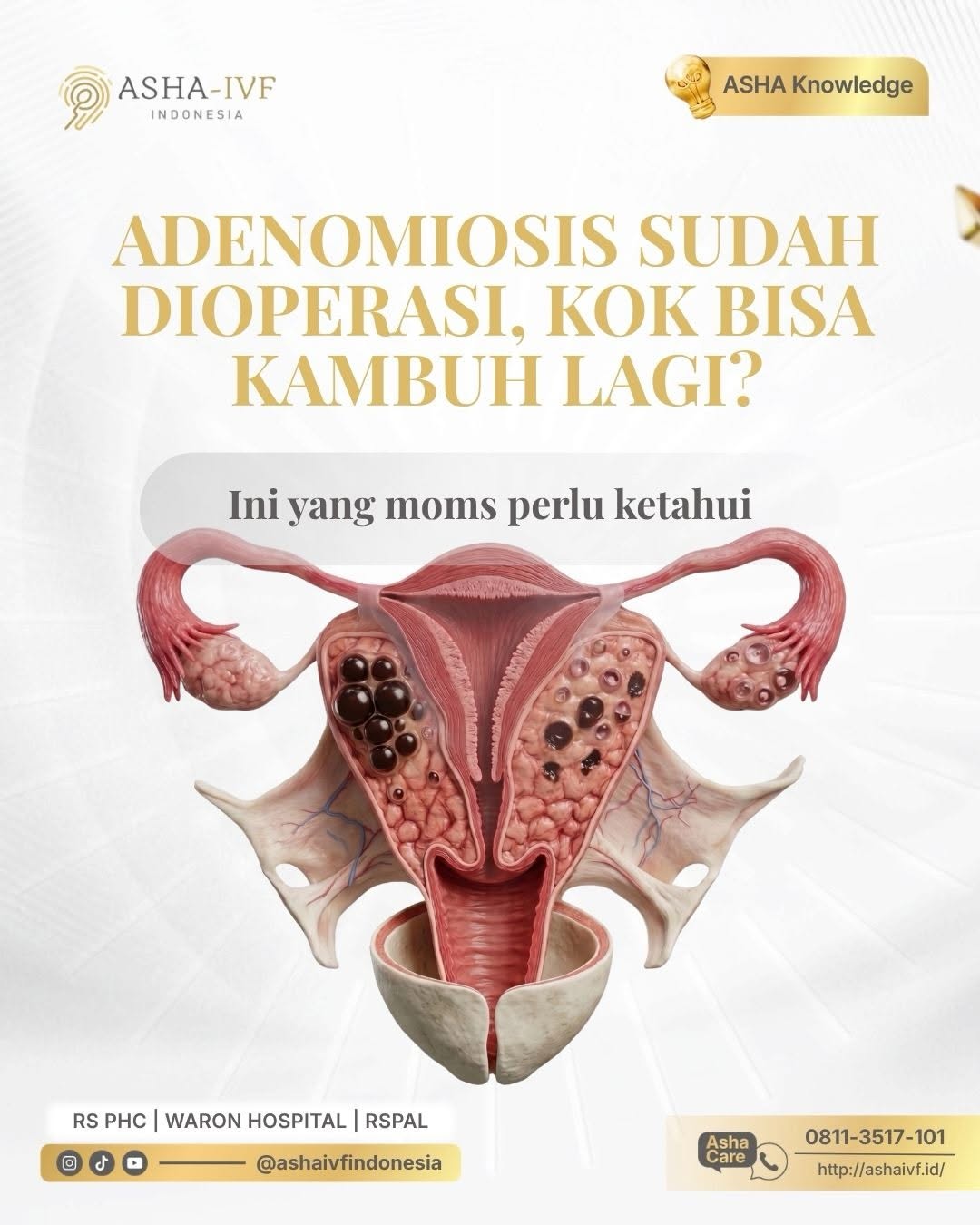
Adenomiosis Kambuh Setelah Operasi: Penyebab dan Langkah Selanjutnya Adenomyosis Recurrence After Surgery: Causes and Next Steps

Operasi adenomiosis tidak selalu menghilangkan penyebabnya sehingga kondisi bisa kambuh. Pelajari alasannya dan cara merencanakan kehamilan dengan tepat.Surgery for adenomyosis does not always eliminate its root cause, so recurrence is possible. Learn why this happens and how to plan your pregnancy effectively.

Adenomiosis Kambuh Setelah Operasi: Penyebab dan Langkah Selanjutnya

Mengapa Adenomiosis Bisa Kambuh Meski Sudah Dioperasi?

Bagi banyak perempuan, mendengar bahwa adenomiosis muncul kembali setelah menjalani operasi tentu terasa mengecewakan. Padahal, keputusan untuk menjalani prosedur bedah bukan hal yang mudah. Lantas, mengapa kondisi ini masih bisa berulang?

Adenomiosis terjadi ketika jaringan yang menyerupai lapisan dalam rahim (endometrium) tumbuh ke dalam dinding otot rahim (miometrium). Pertumbuhan jaringan ini sangat dipengaruhi oleh hormon estrogen. Operasi konservatif — yaitu prosedur yang bertujuan mempertahankan rahim — memang dapat mengangkat atau mengurangi jaringan adenomiosis yang sudah terbentuk, sehingga keluhan seperti nyeri haid hebat dan perdarahan berlebih bisa mereda. Namun, operasi tidak mengubah kondisi hormonal yang mendasarinya.

Faktor yang Meningkatkan Risiko Kekambuhan

  • Sisa jaringan mikroskopis: Adenomiosis sering kali menyebar secara difus di seluruh dinding otot rahim, sehingga sulit untuk mengangkatnya secara menyeluruh tanpa mengangkat rahim itu sendiri.
  • Pengaruh estrogen berkelanjutan: Selama perempuan masih dalam usia reproduktif dan memiliki siklus menstruasi, kadar estrogen tetap aktif dan dapat merangsang pertumbuhan jaringan baru.
  • Derajat keparahan awal: Semakin luas adenomiosis sebelum operasi, semakin besar kemungkinan ada area yang tidak terjangkau selama prosedur berlangsung.
  • Jarak waktu setelah operasi: Kekambuhan umumnya lebih sering terjadi seiring berjalannya waktu, terutama jika tidak ada terapi lanjutan setelah operasi.

Apa Artinya Ini bagi Program Kehamilan Anda?

Jika Anda sedang merencanakan kehamilan dan memiliki riwayat adenomiosis — baik yang sudah dioperasi maupun belum — evaluasi menyeluruh sejak dini sangatlah penting. Adenomiosis dapat memengaruhi kualitas lapisan rahim tempat embrio akan menempel, serta berpotensi memengaruhi cadangan sel telur (ovarian reserve) apabila kondisi ini berkaitan dengan endometrioma pada ovarium.

Langkah Evaluasi yang Umumnya Dilakukan

  1. USG transvaginal: Membantu dokter menilai kondisi dinding rahim dan mengidentifikasi tanda-tanda adenomiosis aktif.
  2. Pemeriksaan cadangan ovarium: Melalui pengukuran hormon AMH (Anti-Müllerian Hormone) dan penghitungan folikel antral untuk mengetahui potensi sel telur yang tersisa.
  3. Diskusi riwayat medis lengkap: Termasuk jenis dan hasil operasi sebelumnya, keluhan saat ini, serta durasi mencoba hamil.

Berdasarkan hasil evaluasi tersebut, dokter fertilitas dapat merekomendasikan pendekatan yang paling sesuai — mulai dari pemantauan siklus alami, stimulasi ovulasi, inseminasi intrauterin (IUI), hingga program bayi tabung (IVF). Pada kasus adenomiosis dengan dinding rahim yang telah terpengaruh, persiapan lapisan rahim sebelum transfer embrio menjadi salah satu pertimbangan penting dalam protokol IVF.

Jangan Menunda Konsultasi

Waktu adalah faktor yang sangat berarti dalam perjalanan kesuburan, terutama bagi perempuan dengan kondisi seperti adenomiosis. Semakin cepat kondisi Anda dievaluasi secara menyeluruh, semakin banyak pilihan yang tersedia untuk membantu mewujudkan kehamilan yang diidamkan.

Jika Anda memiliki pertanyaan seputar adenomiosis dan program kehamilan, tim dokter ASHA IVF Indonesia siap mendampingi Anda dengan pendekatan yang personal dan berbasis bukti. Hubungi kami melalui WhatsApp untuk menjadwalkan konsultasi awal dan mulailah merencanakan langkah terbaik bagi Anda.

Terinspirasi dari aktivitas Instagram @ashaivfindonesia. Lihat unggahan aslinya →

Why Can Adenomyosis Return Even After Surgery?

For many women, learning that adenomyosis has recurred after surgery can feel deeply discouraging — especially given that the decision to undergo an operation is never taken lightly. So why does this condition sometimes come back?

Adenomyosis occurs when tissue similar to the inner lining of the uterus (the endometrium) grows into the muscular wall of the uterus (the myometrium). This tissue growth is strongly driven by the hormone estrogen. Conservative surgery — procedures designed to preserve the uterus — can remove or reduce existing adenomyotic tissue, which often brings relief from symptoms such as severe menstrual pain and heavy bleeding. However, surgery does not alter the underlying hormonal environment that originally allowed the condition to develop.

Factors That Increase the Risk of Recurrence

  • Microscopic residual tissue: Adenomyosis frequently spreads diffusely throughout the uterine muscle wall, making complete removal very difficult without a hysterectomy.
  • Ongoing estrogen exposure: As long as a woman is of reproductive age and continues to menstruate, estrogen remains active and can stimulate new tissue growth.
  • Initial disease extent: The more widespread the adenomyosis before surgery, the greater the likelihood that some affected areas were not fully addressed during the procedure.
  • Time elapsed since surgery: Recurrence tends to become more common as time passes, particularly without adjunct therapy following the operation.

What Does This Mean for Your Fertility Journey?

If you are planning a pregnancy and have a history of adenomyosis — whether previously operated on or not — a thorough early evaluation is essential. Adenomyosis can affect the quality of the uterine lining where an embryo needs to implant, and may also impact ovarian reserve if the condition is associated with ovarian endometriomas.

Typical Evaluation Steps

  1. Transvaginal ultrasound: Allows the doctor to assess the uterine wall and identify signs of active adenomyosis.
  2. Ovarian reserve assessment: Through AMH (Anti-Müllerian Hormone) measurement and antral follicle count to understand the remaining egg potential.
  3. Comprehensive medical history review: Including the type and outcome of any previous surgery, current symptoms, and how long you have been trying to conceive.

Based on these findings, a fertility specialist can recommend the most appropriate approach — ranging from natural cycle monitoring and ovulation stimulation, to intrauterine insemination (IUI) or in vitro fertilisation (IVF). In cases where the uterine wall has been affected by adenomyosis, careful preparation of the uterine lining prior to embryo transfer becomes an important part of the IVF protocol.

Do Not Delay Your Consultation

Time is a meaningful factor in any fertility journey, particularly for women living with conditions such as adenomyosis. The sooner your situation is comprehensively evaluated, the more options remain available to help you achieve the pregnancy you are hoping for.

If you have questions about adenomyosis and fertility treatment, the specialist team at ASHA IVF Indonesia is ready to support you with a personalised, evidence-based approach. Reach out to us via WhatsApp to schedule an initial consultation and take the first step toward a well-prepared fertility plan.

Terinspirasi dari aktivitas Instagram @ashaivfindonesia. Lihat unggahan aslinya →

Kembali ke ArtikelBack to Articles
Chat WhatsAppChat WhatsApp